

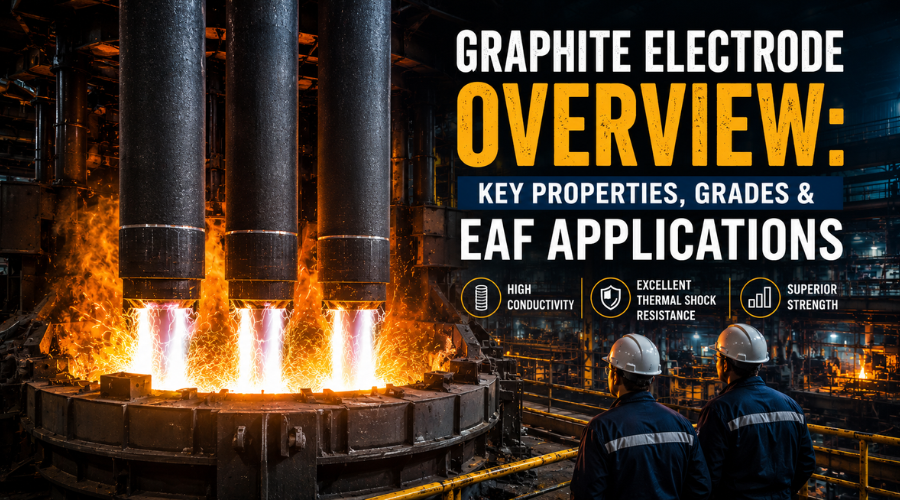
Every ton of steel produced in an electric arc furnace begins with a single, non-negotiable component: the graphite electrode. Without it, the arc does not strike. Without the arc, there is no heat. And without heat, there is no steel.
The global graphite electrode market was valued at USD 14.30 billion in 2024 and is projected to reach USD 20.54 billion by 2033, growing at a CAGR of 4.1%. Behind that growth lies a shift in how the world makes steel. What is boosting the electrode industry growth is an increase in steel production, a surge in the adoption of electric arc furnaces, and favorable environmental laws for electric steelmaking processes.
This guide covers everything you need to know, from the basic science of how graphite electrodes work to the performance distinctions between UHP, HP, and RP grades. We will also discuss in-depth the crucial roles of graphite electrodes in electric arc furnaces, ladle furnaces, and submerged electric furnaces. And if you are currently confused about choosing a bulk graphite electrode supplier, the sourcing section at the end was written specifically for you.
At their core, graphite electrodes are precision-engineered, cylindrical conductors designed to transfer enormous electrical energy into extreme heat efficiently, and at temperatures most industrial materials could not survive.
Large, cylindrical graphite electrodes are manufactured using three core ingredients: coal tar pitch, premium petroleum needle coke, and additives. They transform electrical energy from the power source into heat for melting scrap metal.
The resulting graphite electrode has high electrical conductivity, high temperature resistance, and solid structural strength. These properties allow it to deliver it ideal for use in the extreme conditions of an electric arc furnace. It is not merely a conductor it is the primary thermal engine of the modern steelmaking process.
What makes graphite the material of choice over alternatives like copper?
The answer lies in performance under pressure. Graphite's sublimation temperature reaches 3,800°C, higher than any other known industrial material, enabling stable service in the extreme heat of EAF arcs. Furthermore, unlike most metals, graphite's mechanical strength actually increases with temperature. At around 2,000°C, its tensile strength is approximately 1.6 times that at room temperature.
Physical and Electrical Properties
Understanding the properties of graphite electrodes is how procurement professionals avoid costly mismatches between electrode specification and furnace demand.
Electrical Conductivity
Graphite is known for its exceptional conductivity. The conductivity allows for efficient transfer of electricity to the charge material in the furnace. This high conductivity delivers rapid and uniform heating of the scrap metal, and the result makes the entire process energy efficient.
Thermal Resistance
The superb electrical conductivity of graphite electrodes makes the electrode capable of carrying currents of thousands of amperes, while their exceptional thermal resistance enables them to withstand extreme thermal shock and chemical attack from the molten steel environment. This dual advantage of high conductivity paired with remarkable thermal endurance is what makes graphite superior to every competing electrode material.
Mechanical Strength
UHP graphite electrodes possess exceptional structural strength. This strong build enables the UHP electrode to withstand the exposure to mechanical and thermal stresses that are part of the steelmaking process. Their robust structure and resistance to breakage make them highly reliable for prolonged use in demanding industrial environments.
Oxidation and Consumption Behavior
Electrode consumption is one of the most closely tracked metrics in EAF operations. The average consumption rate of graphite electrodes in EAF steelmaking ranges between 1.7 kg and 2.2 kg per ton of steel produced. Advances in manufacturing, however, are actively compressing that figure. Technological advancements are driving improvements in electrode lifespan, with leading manufacturers achieving average consumption rates below 1.7 kg per ton of steel, compared to 2.5 kg a decade ago.
Why No Substitute Exists
Graphite electrodes are currently the only products with high electrical conductivity that are able to maintain extremely high heat generation in this demanding environment. That is an engineering reality that makes a reliable graphite electrodes bulk supply a strategic priority for the steel-making foundries.
Grade selection is where technical knowledge directly translates into operational savings or operational failures. The wrong grade for a given furnace does not just underperform but increases consumption rates and inflates your cost per ton of steel.
UHP electrodes are the gold standard of modern EAF steelmaking. UHP grade graphite electrodes are premium quality electrodes designed for high-performance applications in electric arc furnaces. They are manufactured using high-quality petroleum coke, needle coke, and coal tar pitch, processed through crushing, calcining, milling, and graphitization. The resulting product delivers superior electrical conductivity, thermal resistance, and mechanical strength.
A UHP electrode has a bigger capacity in terms of electrical load with significantly improved thermal resistance compared to standard and high-power electrodes.
UHP electrodes are engineered to withstand extremely high temperatures exceeding 3,000°C and are characterized by their high current carrying capacity. For any steel mill running high-efficiency heats above 150 tons per cycle, UHP is not a premium but a requirement.
HP electrodes sit between UHP and RP grades in both performance and application scope. Their physical and mechanical properties are higher than RP graphite electrodes, including lower electrical resistance and allowance for a greater current density. They are suited for furnaces that operate at high but not maximum power levels particularly mid-range EAFs, refining applications, and operations where budget constraints make full UHP specification difficult to justify at scale.
For steel mills balancing performance requirements against cost-per-electrode, HP grades represent the middle tier in pricing. They deliver significantly better thermal stability and arc performance than RP, without the premium raw material costs that come with UHP production.
RP electrodes are produced using ordinary grade petroleum coke and are treated with lower graphitization temperatures.
RP electrodes are the appropriate selection for lower-power electric arc furnaces, foundry applications, and smaller-scale operations where current demand does not justify the step-up in raw material and manufacturing cost. They remain widely used across emerging markets and smaller steel facilities where operational economics favor cost efficiency over maximum throughput.
Property UHP HP RP
Raw Material Premium Needle Coke Needle Coke / Petroleum Coke Ordinary Petroleum Coke
Current Density >25 A/cm² 17–25 A/cm² <17 A/cm²
Thermal Resistance: Highest, High, Moderate
Mechanical Strength: Highest High Standard
Primary Application Modern Large-Scale EAF Mid-Range EAF / Refining Low-Power EAF / Foundry
Consumption Rate: Lowest, Moderate, Higher
Applications: Where Graphite Electrodes Work Hardest
EAFs have become a popular alternative to conventional blast furnaces due to their energy efficiency, adaptability, and reduced environmental impact. EAFs are part of the production setup for the making of specialty steels and the recycling of scrap metal.
The steelmaking process involves inserting graphite electrodes into the furnace through electrode holders. When an electric current is passed through the electrodes, an electric arc is formed between the tip of the electrode and the materials in the furnace. The high temperatures generated by the electric arc melt the scrap steel, transforming it into liquid steel.
Over 45% of global steel production through EAF routes relies heavily on high-power graphite electrodes due to their excellent thermal conductivity, low electrical resistance, and ability to withstand extreme temperatures above 3,000°C. And the environmental math makes a compelling case for further EAF adoption. The transition from traditional blast furnaces to electric arc furnaces is estimated to reduce CO₂ emissions by nearly 60%.
A ladle furnace is defined as a secondary refining unit for steel that uses graphite electrodes to generate high-power electric arcs for heating. This heating is vital for the purification of molten steel through the addition of various fluxing agents.
A ladle metallurgy furnace is used to refine molten steel into specialty grades while remaining in the ladle. Think of it as precision engineering applied to liquid metal.
The main functions of a ladle furnace are several. The core function is the reheating of liquid steel by electric power conducted by graphite electrodes. Maintaining a uniform steel temperature and chemistry through argon gas rinsing. Helping the formation of a slag layer, which protects the refractory from arc damage, and lastly, addition of ferro-alloys for chemical control.
Graphite electrodes inject electric current into the furnace and increase the temperature without melting the steel again. They are designed to withstand high temperatures and erosion. That is why they have a long service life across several refining cycles. The temperature control they deliver is crucial for premium-quality steel production.
For steel mills producing automotive-grade, construction-grade, or toolmaking steel, the ladle furnace is indispensable. And so is the electrode quality that powers it.
Beyond steel, graphite electrodes power an entirely different class of industrial production. A submerged arc furnace is an industrial electric furnace that uses the electric arc generated between the carbon graphite electrode and the charge to provide a heat source, achieving the smelting and refining of raw materials such as ores.
The submerged arc furnace graphite electrode is mainly used to produce ferroalloy, pure silicon, yellow phosphorus, matte, and calcium carbide. These materials form the building blocks of industries ranging from chemicals to construction materials to advanced manufacturing.
The principal applications of submerged arc furnaces are for reducing highly endothermic ferroalloys of high melting points, such as ferromanganese, nickel, chrome, silicon, tungsten, and molybdenum. Consumption volumes in SAF operations are significant: each ton of silicon needs to consume about 150 kg of graphite electrodes, and each ton of yellow phosphorus needs approximately 40 kg of graphite electrodes. That kind of consumption intensity makes supply reliability crucial for maintaining operations.
Sourcing graphite electrodes for EAF operations is not a simple price-per-ton calculation. The wrong specification choice or an unreliable supplier can disrupt an entire production schedule. Here is what experienced procurement professionals evaluate before committing to a bulk supply arrangement.
Confirm that the electrode grade aligns with your furnace's power class UHP for high-capacity modern EAFs, HP for mid-range operations, and RP for lower-power configurations.
Know your kg-per-ton-of-steel consumption figure and use it as the primary performance metric when evaluating electrode quality across suppliers.
Inspect joint integrity specifications carefully a weak nipple connection under thermal stress is one of the leading causes of unexpected electrode breakage and production stoppages.
You need to confirm if your chosen bulk graphite electrodes supplier can commit to defined delivery schedules and volume requirements that match your production cycle.
Ask the supplier to submit third-party test data that provides specs about electrical resistivity, bulk density, flexural strength, and coefficient of thermal expansion. Do not skip this, or else you will end up with an inferior quality electrode supplier.
Confirm that the electrode diameter being supplied is correctly matched to your furnace's transformer capacity and electrode holder configuration.
Choose a graphite electrode factory with demonstrated and specialized technical knowledge in EAF-grade production. General-purpose carbon product manufacturers, which you will encounter in your search lack expertise in industrial-grade electrode manufacture.
A reliable graphite electrodes exporter China should have a proven logistics track record and a history of clear lead time commitments.
Do a cost and benefit analysis between spot purchasing and a long-term supply agreement, particularly during periods of high global EAF activity when the supply of electrodes tightens.
The modern steel industry depends on precision. Everything from temperatures and chemistry to timing needs to be precise. And at the core of that precision is the graphite electrode. From the raw power of the Electric Arc Furnace to the fine-tuned refining of the Ladle Furnace and the demanding smelting conditions of the Submerged Electric Furnace, graphite electrodes are at the center of metal production. The grade you choose UHP, HP, or RP determines how efficiently that heat is generated, how long your electrodes last, and ultimately, what your cost per ton of steel looks like.
Can RP electrodes be used in an electric arc furnace?
RP electrodes can be used in lower-power electric arc furnaces and foundry applications where current demand does not exceed 17 A/cm². Attempting to use RP-grade electrodes in a high-power modern EAF results in accelerated consumption rates, arc instability, and significantly higher cost per ton of steel produced.
How does electrode grade selection affect overall steelmaking cost?
Electrode grade directly impacts consumption rate, arc stability, and heat cycle efficiency. A correctly specified UHP electrode in a high-power EAF delivers lower consumption per ton of steel, fewer production interruptions, and reduced total operating costs making grade selection a procurement decision with direct bottom-line consequences.


Have a question or need a quote? Fill out this form and our team will get back to you quickly!
 jack@sinometalunion.com


 +86-411-39625877