

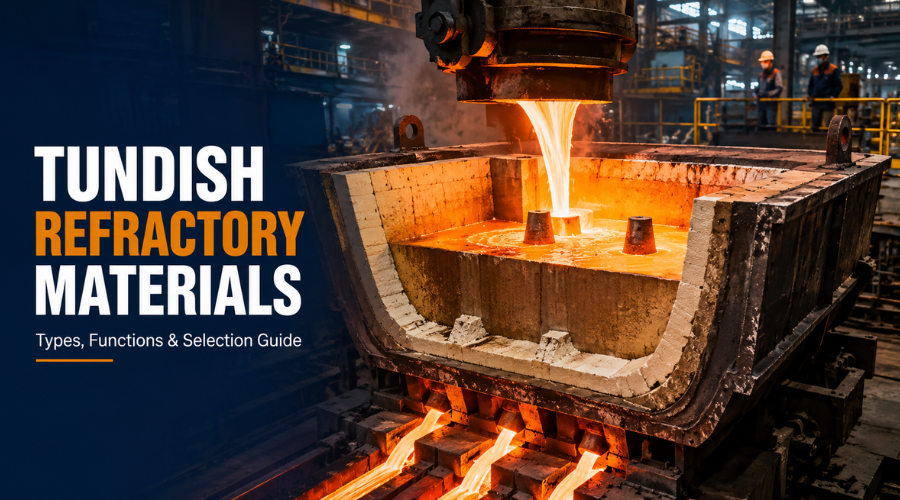
There are multiple layers in a tundish shell, and each layer contributes to metal casting. These refractory layers are of different resistance levels and thickness to support the process. When you are about to source them from a China tundish refractory supplier, this information will help you. Make sure you read about it because each layer has a different refractory material.
Starting with the fifth layer, which is the innermost layer. It is of an alumina or zirconia coat, which is in direct contact with the molten metal in a tundish shell. This protective layer creates a smooth surface in the working layer by sealing every flaw, such as pores and cracks.
With a thickness of less than 10 mm, it provides good enough protection for the working layer. This protective layer prevents the metal adhesion on the working layer (fourth layer). It also helps separate the tundish skull after the cooling process.
Then there is the fourth working layer, which we slightly discussed in the above section. It has a dry vibration mass for continuous casting. It is the second inner lining and is almost in direct contact with molten metal. That is why its thickness is between 20 mm and 50 mm. This layer is made up of magnesium oxide and calcium oxide board.
Its dry mass or dry vibration of alumina or magnesia helps it resist extreme heat throughout the casting process. Due to that material, it protects the permanent layer, which is the third layer.
The working layer is easily replaceable after every operation. This is why it also has a disposable refractory material called gunning mass. That gunning mass has a very short life
Then comes the third layer, which is a permanent layer. Its thickness is the highest, which is between 100 mm and 200 mm. That permanent layer has aluminum oxide bricks that provide backbone support. That is how this third layer is the strongest, which provides the primary support to the second and fourth layers. Its high density helps it hold the main load, such as extreme pressure and temperature of the process. It reduces the load on the insulating layer, which is why it is like the main pillar for the tundish refractory shell.
Then the second layer comes, which is the insulating layer. It is just after the outer lining, which is of steel. This insulating layer is made of alumina silicate fiberboard, and its thickness is between 10 mm and 30 mm. This second layer creates insulation between the steel shell (the outermost layer) and extreme heat and damage. The insulating layer also prevents heat loss and supports the permanent layer.
Then comes the outermost layer, which is the final surface. This final surface is of steel, and it is around 15 mm thick. This primary base holds the entire weight of the shell and everything in it. The insulating layer and permanent layer reduce lots of temperature and pressure on this final layer. This is why it safely provides the structural support to a tundish refractory shell.
Now, we are about to discuss some global suppliers of tundish refractory materials. These are the bulk suppliers who deal in tons, and they meet global industrial requirements. Refractories source tons of material from them for their large-scale metal casting operations. Here is a short list of those suppliers because they have a wide range of options specifically for tundish refractory continuous metal casting operations.
The first one is Sinometal Machinery Corp, which is a bulk supplier of refractory materials. You can explore its website, and it has a fine range of options for the metal industry. It has gunning material, Dry vibration mass for tundish, coating material, and spray mass backfill sand.
It is an ISO-certified manufacturer of tundish refractory materials that has competitive rates and a global supply. Besides, you can contact them for samples and quotations, including more information.
The second manufacturer of refractory materials is Zhongfu Metallurgical Materials Co., Ltd. You will find similar varieties since it also specifically deals in refractory materials used in continuous metal casting. Likewise, you will find gunning material, dry vibration mass for tundish, coating material, and fluid casting material. These options are available on this website, and industries can further explore more. This manufacturer also offers global supply from China to every industrial buyer across the globe.
The third supplier is Zhong Tang (Dalian) Materials Co., Ltd. It is also a certified supplier of tundish refractory materials. It has over fourteen types of refractory materials on its website. You can also find tundish components on its website that are used in the tundish shell. It has a lining coating, dry vibration mass for the tundish, and every supportive material you need. Even the composition details are available on its website, along with custom production. This global supplier provides a complete solution to metal casting industries worldwide.
Tundish refractory materials are of different types because there are five layers in the continuous casting shell. That tundish shell requires multiple layers because molten metal can penetrate a few layers of ordinary material quite easily. This is why refractory materials are the best solution to withstand extreme heat, pressure, and corrosion risk from the molten metal. Different layers have different thickness levels, too. Therefore, each refractory material has a unique function to hold the molten metal’s heat within the shell. Metal casting industries can source these refractory materials from bulk suppliers. Some of those suppliers are in this blog that may meet all the requirements of buyers.
Where Can I Find a Tundish Refractory Material Manufacturer with High Purity?
You can find such high-purity tundish refractory material from a few manufacturers. You can find them on B2B websites like Alibaba.com, Made-in-China.com, or Tradewheel.com. You can also try Sinometal Machinery Corp.
Is There Any China Tundish Refractory Supplier Who Has a Budget-Friendly Supply?
Yes, there are some options that can offer industry-competitive rates. Sinometal Machinery Corp can also do this, and you can contact it for details. It is a global supplier of tundish refractory materials.
Is a B2B Platform a Reliable Way to Source Tundish Refractory Materials?
Yes, it is a reliable platform to source tundish refractory materials. You can verify suppliers on it, and you may find a custom solution from some manufacturers, also.


Have a question or need a quote? Fill out this form and our team will get back to you quickly!
 jack@sinometalunion.com


 +86-411-39625877